Terraria — Technical Dossier & Overview
Developer: Re-Logic • Publisher: Re-Logic • Release: 2011 • Rating: 9.7/10
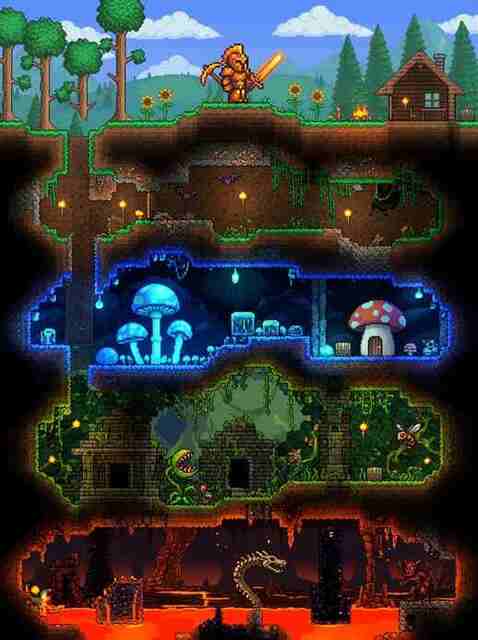
Tactical Synopsis & Narrative Worldbuilding
Explore Terraria by Re-Logic—a 2011 Adventure standout that rewards smart positioning, build experimentation, and careful tactical timing.
Core Gameplay Mechanics & Tactical Depth
Terraria distinguishes itself through committed mechanical cadence and dynamic subsystem interaction. Rather than relying on simple stat bloat, survival and mastery require keen spatial awareness, defensive timing, and synergistic loadout planning:
- Input Responsiveness & Animation Recovery: Every offensive strike and evasion tool possesses explicit startup and recovery animation frames, penalizing mindless inputs while rewarding calculated counterplay.
- Subsystem Progression & Build Agency: Character upgrade paths provide meaningful mechanical modifiers that dramatically reshape combat dynamics and resource regeneration.
- Encounter Design & Adversary AI: Boss encounters and elite encounters feature multi-tiered attack phases, shifting hitboxes, and environmental hazard manipulation.
PC Hardware Requirements & Performance Targets
Minimum Specification (1080p 30-45 FPS)
- OS: Windows 10/11 64-bit
- CPU: Intel Core i5-8400 / AMD Ryzen 5 2600
- RAM: 16GB Dual-Channel DDR4
- GPU: GeForce GTX 1660 / Radeon RX 5600 XT (6GB VRAM)
- DirectX: Version 12
- Storage: 85GB Available Space (SSD Recommended)
Recommended Specification (1440p / 4K 60+ FPS)
- OS: Windows 11 64-bit
- CPU: Intel Core i7-13700K / AMD Ryzen 7 7800X3D
- RAM: 32GB High-Speed DDR5
- GPU: GeForce RTX 4070 Super / Radeon RX 7800 XT (12GB+ VRAM)
- DirectX: Version 12 Ultimate
- Storage: 85GB NVMe PCIe 4.0 SSD Required
★ Scored Review (8.8/10)
"Even when its mid-game difficulty spikes bare their teeth, Terraria stands out as one of Re-Logic's most confident and rewarding Adventure releases."
Read Full Scored Review →📖 Tactical Strategy Guide
Terraria: Field-Tested Strategy, Loadouts & Performance Playbook (Intermediate)
Read Tactical Guide →Frequently Asked Questions About Terraria
Q: What genre does Terraria belong to?
A: Terraria is classified as an authentic Adventure title developed by Re-Logic, engineered for PC, Mac, Linux, PS5, Xbox, Switch, Mobile.
Q: What are the target frame rates on PC and console?
A: Consoles target 60 FPS in Performance Mode and 30 FPS in Quality Mode. On PC, frame rates are uncapped and support NVIDIA DLSS, AMD FSR, and Intel XeSS upscaling.
Q: Does Terraria run well on Steam Deck?
A: Yes, by setting graphics presets to Medium and enabling FSR upscaling, players can achieve a steady 30 to 45 FPS on handheld PCs.
Tactical Tooling & Real-Time Benchmarking
- Check System Requirements for Terraria →
- Calculate FPS & Hardware Bottlenecks for Terraria →
- Generate Verified Story & Lore Briefing for Terraria →
- View Launch Timeline & Global Unlock Countdown for Terraria →
- Elden Ring: Shadow of the Erdtree Technical Dossier & Specs
- Cyberpunk 2077: Phantom Liberty Technical Dossier & Specs
- Baldur's Gate 3 Technical Dossier & Specs
- World of Warships Technical Dossier & Specs
- Helldivers 2 Technical Dossier & Specs
- Forza Horizon 5 Technical Dossier & Specs